
Kessler spindle repair and rebuild
Kessler motorized spindles go to Superior Spindle Services in Taylor, Michigan — factory trained on Kessler spindles, and running a Kessler Smart Test Stand. DDP places the job, stays on it through teardown and run-off, and gets you back the spindle together with the data that proves it.
Where Kessler work goes, and why that matters
A Kessler is a motorized spindle. The rotor lives inside it, which means the electrical side, the thermal side, and the mechanical side are the same problem — you cannot rebuild the bearing pack and call the job finished if the motor is running hot or the coolant circuit is not moving what it should. Proving all three are right at once takes a stand built for the spindle, not a generic run-off.
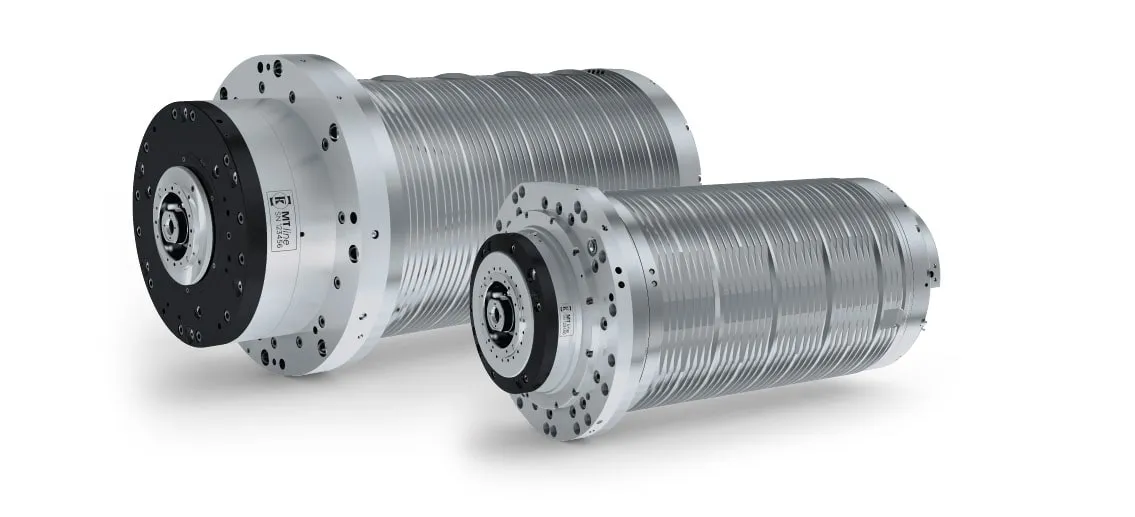
Superior Spindle Services is factory trained on Kessler spindles. That is training on the make itself rather than experience picked up on whatever Kessler happened to come through the door — it is the difference between a shop that has seen one and a shop that was taught the bearing arrangement, the preload spec, and the thermal behaviour by the people who designed it.
That is the route DDP places Kessler spindles on. We are not the shop and we do not pretend to be — what we bring is knowing which door your make and model should go through, and then owning the job so it does not stall between your plant and theirs.
- Facility
- Superior Spindle Services
Taylor, Michigan - Kessler credential
- Factory trained
- Run-off
- Kessler Smart Test Stand, data returned with the spindle
The Kessler Smart Test Stand
The rebuilt spindle is run on Kessler's own Smart Test Stand before it ships. It is an enclosed cell that holds the spindle under load while logging every channel at once — speed, vibration at both bearing positions, motor and bearing temperatures, the coolant circuit, and what the motor is actually drawing. Nothing about the result is a judgement call afterward; it is a recording made while the spindle was running.
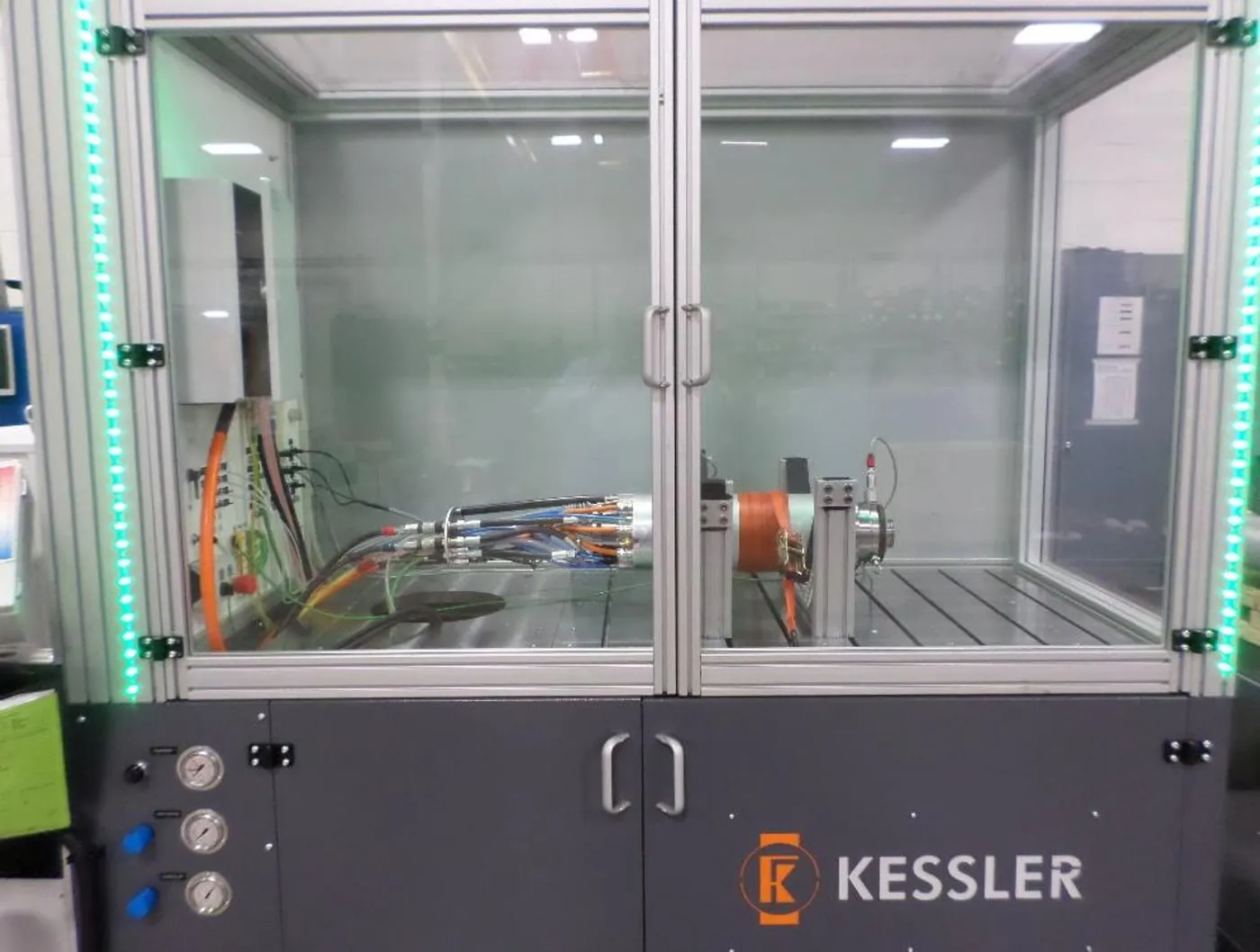
What it records
- Spindle speed rpm
- Front bearing unbalance mm/s
- Rear bearing unbalance mm/s
- Motor temperature °C
- Front bearing temperature, positions 1 and 2 °C
- Rear bearing temperature, positions 1 and 2 °C
- Coolant temperature in °C
- Coolant temperature return °C
- Coolant flow rate l/min
- Motor current A
- Power draw kW
- Power loss kW
What the run-off record looks like
A run-off is not a spin-up and a signature. The traces below come from a Kessler test-stand report covering a single spindle across roughly six hours: a stepped run-in through the speed range, then a sustained hold at operating speed with every channel still logging.
The vibration chart is the one to read first. Front and rear bearing unbalance are plotted against a scale that runs to 3 mm/s, and both traces sit near the floor of it for the entire run — the step-up spikes stay under 0.4 mm/s and the sustained portion is flatter still. A bearing pack that was going to complain has six hours to do it.
You get the report for your spindle, with your serial number on it, in the box with the unit. It goes in the maintenance file and it is what you hand whoever asks why the rebuild was worth the money.
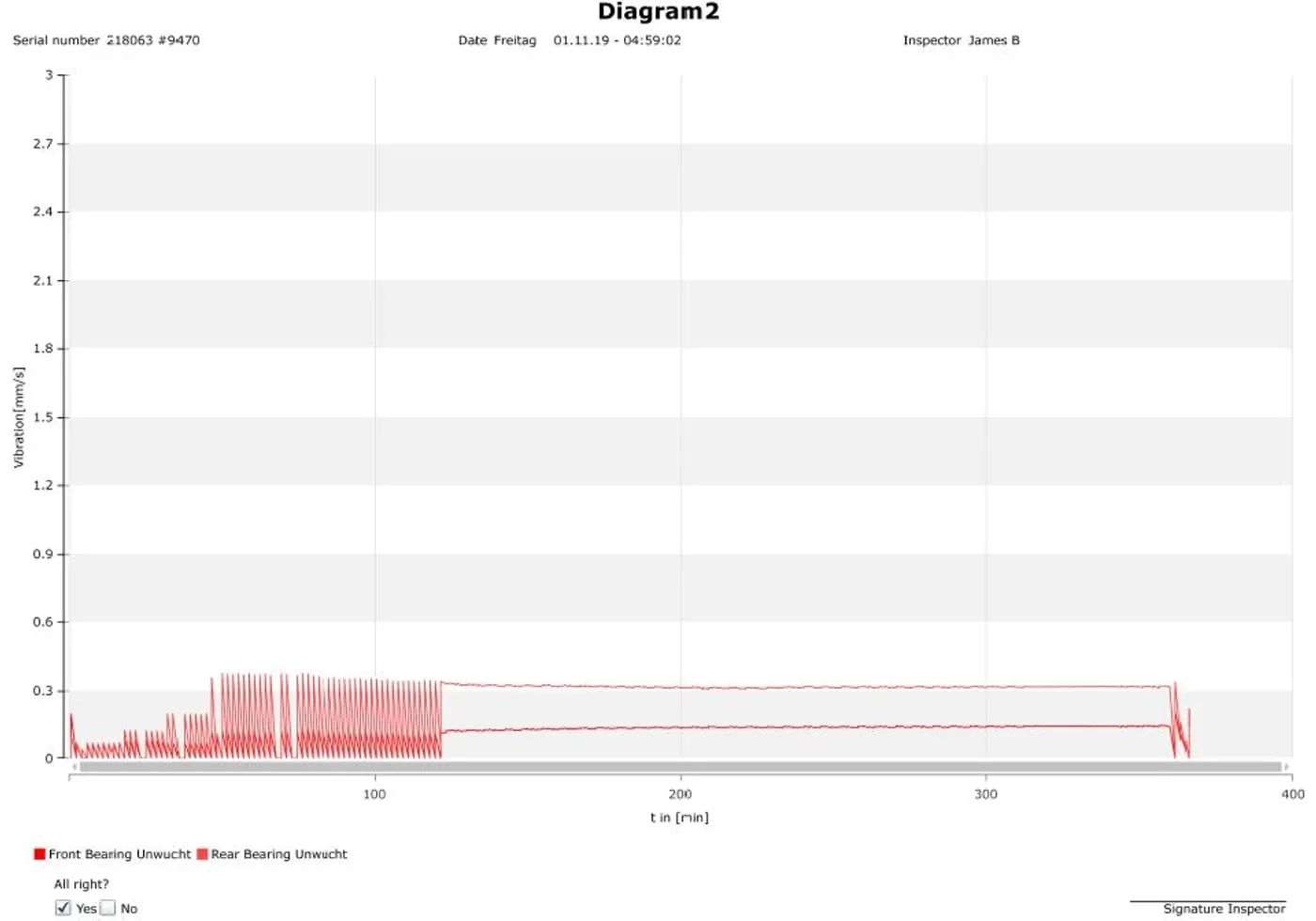
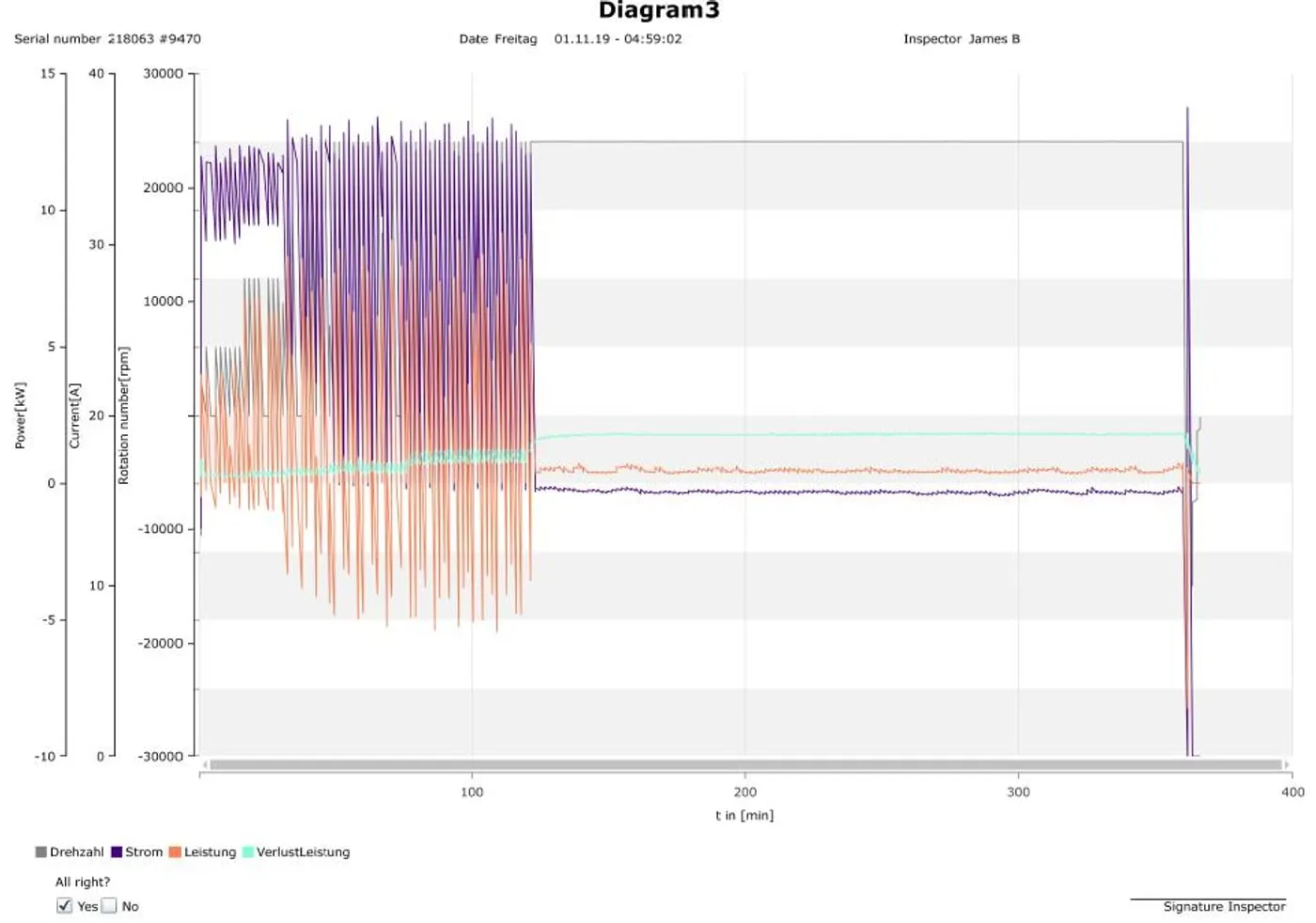
Sample records from a Kessler test-stand report. Your spindle's data is specific to your unit.
What DDP does in the middle
Placing the spindle is the first five minutes. After that it is logistics, a detailed teardown quote you have to understand before you approve it, and someone chasing the schedule when your line is down and the answer "it's at the shop" is not good enough.
That is the job. One number, one person who already knows your machine, and no gap between you and the facility where a job goes quiet for a week. We will follow the spindle from drop-off to shipment.
Turnaround
Kessler work runs on the spindle line's published windows. Where a part has to come from Germany, you hear about it before the clock starts.
| Stage | Turnaround |
|---|---|
| Written quote and failure analysis From receipt of the spindle at the facility. | 1-3 business days |
| Standard repair From your approval of the quote. | 10-14 business days |
| Emergency quote The day the spindle is received. | Same day |
| Emergency repair From approval. Weekday overtime and weekend service on request. | 1-3 days |
Standard lead times extend where parts are not readily available or the teardown finds severe damage — you hear that before the clock starts, not after. Emergency service depends on facility availability and cannot be offered on every make and model.
Not a Kessler?
The same placement logic applies to every make we handle — Mazak, Okuma, DMG Mori, Weiss, Fischer, GMN and the rest. The spindle repair page covers what a complete rebuild includes, the six signs a spindle is failing, and how to tell a rebuild from a replacement.
Kessler down? Start with the make, model, and what it's doing.
Call the line and you will get a realistic answer on the phone from someone who has placed this repair before — including whether a rebuild is even the right call for your unit.